

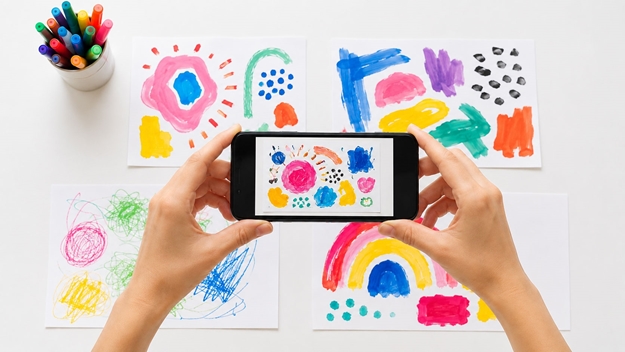
Quick answer: photograph artwork in soft daylight, keep the phone parallel to the paper, crop cleanly, and save each image by child and year before deciding what to keep.
Photographing kids artwork is not about making every sheet permanent. It is about keeping the memory before the paper creases, paint flakes or the cupboard pile becomes impossible to sort.
A clean photo gives you permission to let some pieces go while still protecting the story.
Photograph before you decide
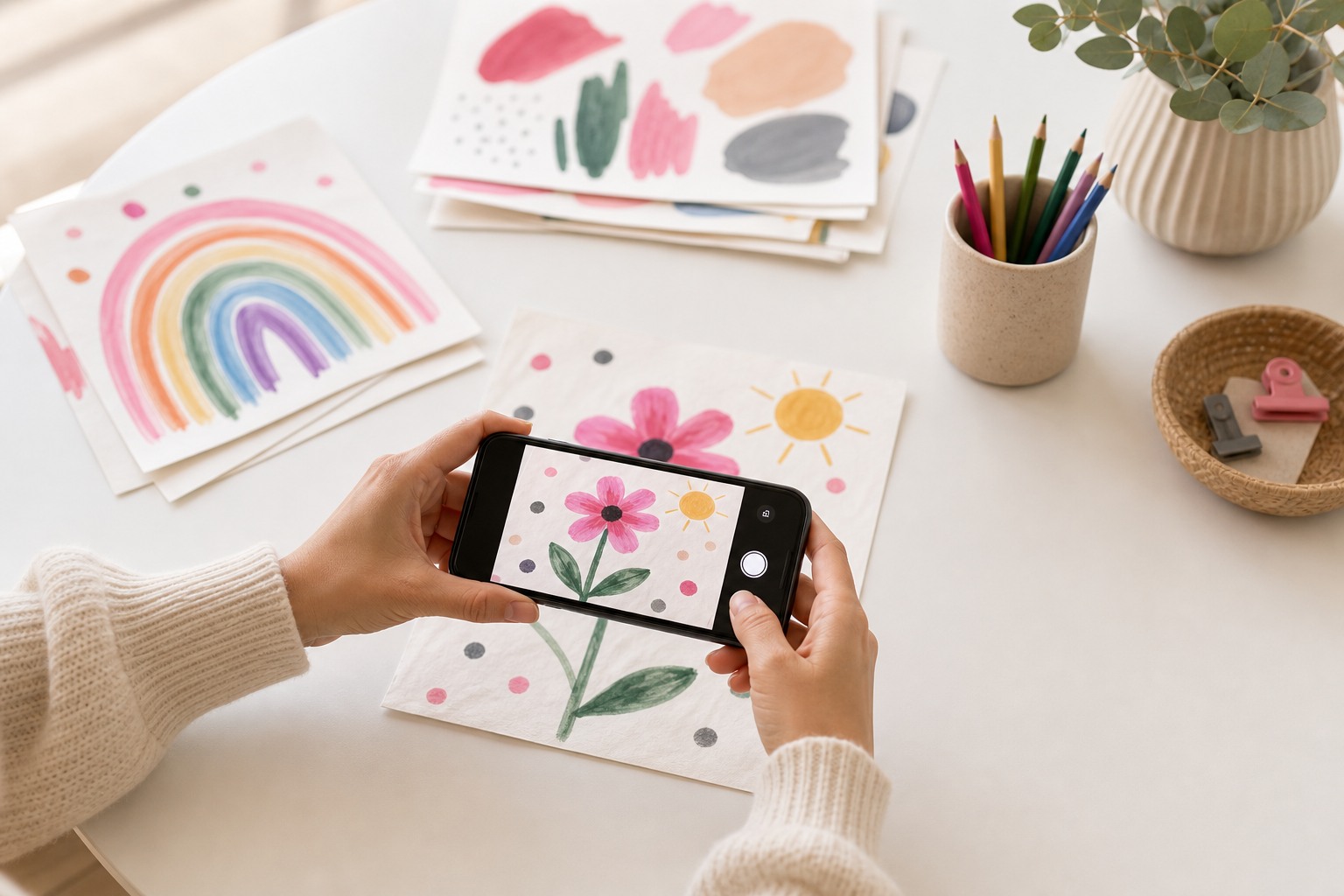
Photographing the artwork first keeps the memory safe before the paper decision begins.
A clear photo makes letting go feel kinder.
Take photos before sorting into keep, gift or recycle piles. The photo acts as a gentle safety net, especially for bulky craft, fragile paint and school pieces that are sweet but not forever pieces.
Use Daylight
Place the artwork near a window, away from direct glare and strong shadows.
Square The Phone
Hold the phone straight above the paper so the edges do not bend or stretch.
Crop The Edges
Leave enough paper edge to show the original, then crop out the table clutter.
Name The Folder
Use a simple folder by child and year so the memory is easy to find later.
When a photo is enough
A photo is enough for everyday paintings, repeated school worksheets, bulky craft and pieces your child enjoyed making but may not ask about again. It honours the moment without asking your home to store every sheet.
When the original deserves more
Keep the original when the artwork has a clear memory, a first, a favourite colour phase or a story only your family understands. If the marks and colours still feel alive, it may also be a strong candidate for a Jellybeanstreet artwork proof later.